

A Project Manager’s Journey Through a Fictional Software Build
At EllisPoint Consulting, no one expected the newest project manager, Tracey Miller, to lead a software build. She wasn’t a developer. She didn’t speak much Python or Java. But when the CEO handed her the responsibility for building a custom client portal—an idea that had been floating around for months—it became her job to take it from vision to Version 1.0.
Setting the Scene
The fictional client wanted a secure, user-friendly portal to manage onboarding and communications for their 300+ partners. What they had instead was a chaotic mess of PDFs, spreadsheets, and shared drives. Tracey was tasked with leading a cross-functional team—three developers, a UX designer, a QA tester, and a senior stakeholder known for “reply-all” emails.
The deadline was tight. The expectations were high. And Tracey’s greatest strength was turning complexity into clarity.
The Project Approach
Kicking off with clarity
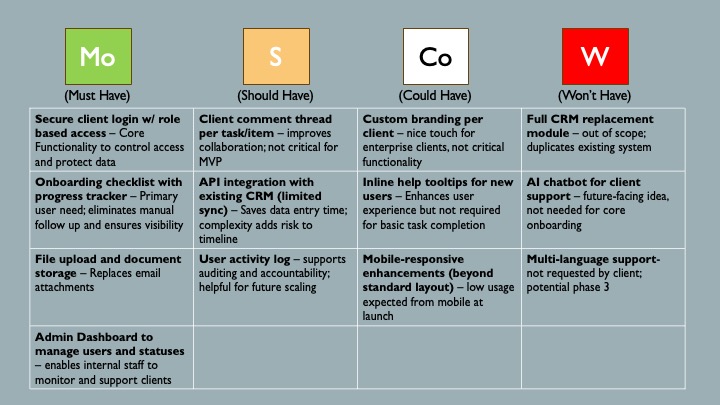
Tracey began by leading discovery sessions with both users and stakeholders. She asked questions, mapped pain points, and distilled the feedback into user stories that guided the development process. Using a MoSCoW matrix, she helped the team agree on what was truly essential for the first release and laid out a phased roadmap for future iterations.
Working in sprints
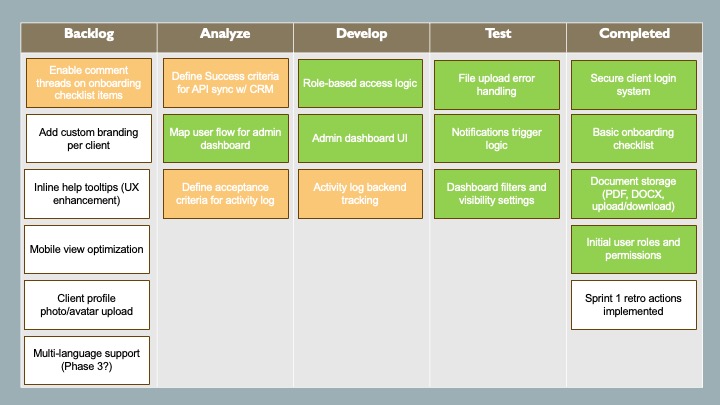
Though the company wasn’t formally Agile, Tracey introduced a lightweight sprint structure: two-week cycles, daily standups, and retrospectives. She implemented a variety of project tools to keep progress visible and responsibilities clear, giving the team just enough process to stay focused without feeling micromanaged.
Making communication a deliverable
One of Tracey’s key contributions was creating a weekly update that outlined progress, flagged risks, and clearly stated what input was needed from stakeholders. It replaced countless status meetings and became a trusted source of truth for the project’s progress.
Managing scope without shutting down creativity
Midway through development, a stakeholder proposed a new feature that would have pushed the timeline by nearly a month. Rather than shutting it down, Tracey facilitated a session to assess impact and value. The team collectively decided to table the idea for Phase 2—preserving the launch schedule without stifling innovation.
The Outcome
The client portal launched just ahead of schedule and under budget, with strong adoption and minimal support issues. The client’s operations team reported a 40% drop in onboarding-related emails within the first month. The internal team at EllisPoint agreed to continue working with Tracey on Phase 2 development, citing the project’s smooth communication and collaborative culture.
Why I Wrote This Fictional Case Study
Though the story of EllisPoint is fictional, the approach is real. It reflects how I manage projects in any industry: by listening closely, planning with purpose, and keeping people aligned through proactive communication. Software development may not be my technical background, but leading people, removing blockers, and delivering results? That’s squarely in my lane.

 Tracey Miller, Project Manager
Leave a reply to Ananya Sharma Cancel reply